
Special thanks to Rege Behe for this wonderful interview in the Pittsburgh Tribune-Review, and to Andy Russell for making me look good!
Special thanks to Rege Behe for this wonderful interview in the Pittsburgh Tribune-Review, and to Andy Russell for making me look good!

About Sherrie Flick and Jeff Condran, briefly:
Sherrie Flick is the author of the award-winning flash fiction chapbook I Call This Flirting and the novel Reconsidering Happiness. Her work has appeared in many literary journals and anthologies, including Norton’s Flash Fiction Forward and New Sudden Fiction. A recipient of a Pennsylvania Council on the Arts Fellowship, she works in Pittsburgh as a freelance writer and teaches creative writing and food writing at Chatham University.
Jeffrey Condran’s fiction has been honored with several awards, including The Missouri Review’s William Peden Prize and Pushcart Prize nominations. He teaches writing and literature at the Art Institute of Pittsburgh and is the co-founder of Braddock Avenue Books.
Over the years, I’ve personally learned a ton from listening to both Sherrie and Jeff read and speak, and it’s really cool to be reading with them again!
“Stephen King wrote four books before Carrie was published, and that’s not uncommon. I’m not sentimental enough to say that years of being brusquely dismissed or apologetically rejected somehow improved me, but I can honestly say it was worth it. You have to believe good work will find a home.”
So, my latest (and probably best) piece, “How I Published My First Novel Against All Odds’ is now up at Thought Catalog. I don’t remember writing that title, but I do remember an AWP panelist a few years ago saying something like, “There are a lot of books out there, so it takes a while for the cream to rise to the top.” It’s not my place to say how creamy my novel is, but as someone who was fighting for a publication slot, I can say that the competition out there is pretty fierce. Just the numbers alone…. But in my TC article, I describe what it’s like to wait while people are making decisions about your work. Hopefully it’s more heartening than terrifying, but I do think that writers–especially aspiring novelists–deserve to know the truth.
http://www.dailymotion.com/video/xu4uz_phil-collins-against-all-odds_music

“Pittsburgh is changing. I don’t know if it’s for the better or for the worse. I once worked for the USW … as a camera-man for their secretly-funded protest of Chinese goods. I worked on top of West Mifflin’s great Slag Mountain … at the local Wal-Mart. I even worked in Homestead, but long after the mills there had been paved over.”
The intro to the Pittsburgh Anthology, written by the inimitable Eric Boyd, is now online! It’s a great read, especially if you’re interested in Pittsburgh and want a new perspective on the city. I’m thrilled to be representing The ‘Burgh in this anthology, and I’m definitely in fine company. Can’t wait to sit down and read it!
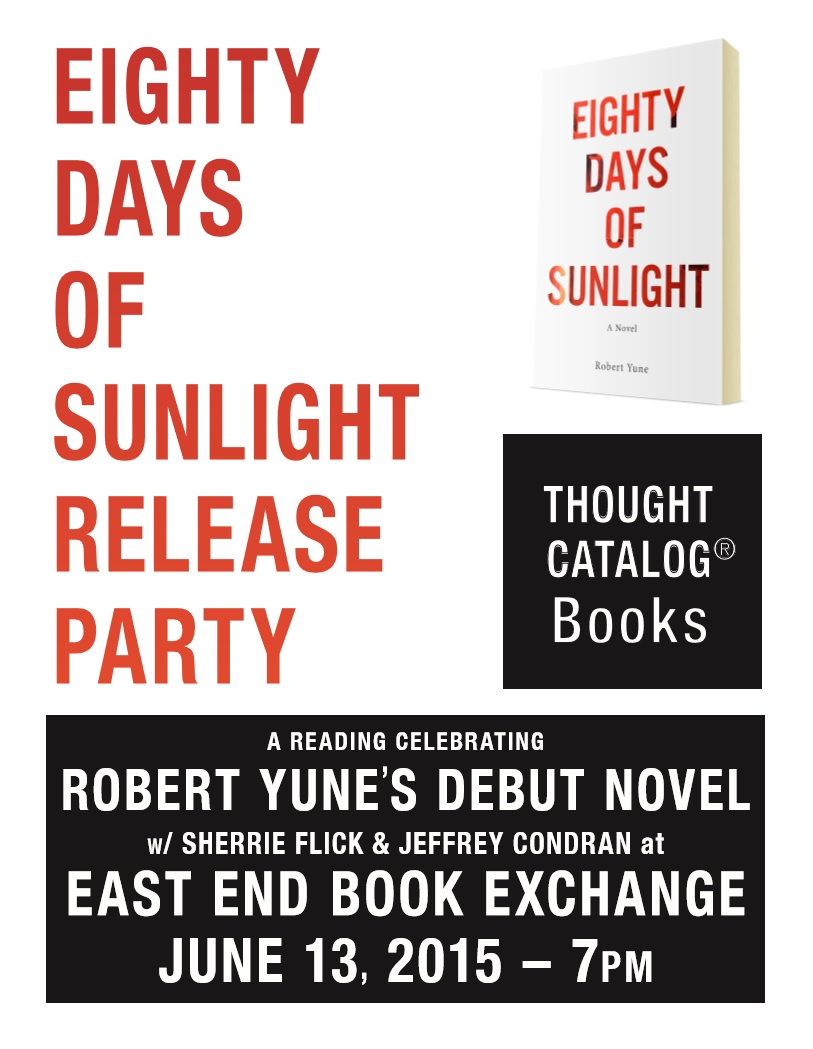
Special thanks to Joel Coggins for designing this lovely poster. Hope you can make it to this event!
 Newsweek just published an article about Thought Catalog, the parent company of my publishing label, Thought Catalog Books. It’s an interesting, thorough piece, definitely worth a read if you have time. I actually got an invite to the party the article describes in its opening, but I couldn’t make it for some legit reason. Some excerpts:
‘This is an insanely special occasion,’ [site contributor Mat] Devine gushed. ‘On February 1 of 2010, Thought Catalog had 200 visitors. On February 1, 2015, Thought Catalog had 1 million visitors.’ He introduced ‘the man of the hour,’ Thought Catalog founder Chris Lavergne, who gave a brief speech thanking everyone who’d contributed to the company over the years, and then introduced the musical duo ASTR, which performed as partygoers stood around munching cotton candy.”
“Meanwhile, Thought Catalog’s books division has flourished, publishing eBooks by respected authors like Prozac Nation writer Elizabeth Wurtzel and, next month, philosopher Simon Critchley.”
“[Rachel Kramer Bussel’s] essay collection, Sex and Cupcakes, was published with Thought Catalog Books in 2014.She likes that Thought Catalog is thriving. ‘Seems like they’ll be around for a long time, and I don’t always feel that way. I’ve written for a lot of sites that have closed within maybe a year or two.'”
I was initially skeptical about publishing with an independent press. Since I was a teenager, I remember looking at big publishers’ logos and saying, “Someday…” I don’t know: there was something very staid and stable about the way their books were presented. The idea of being part of a tradition and adding to the great hall of American arts and letters really appealed to me.
After I finished graduate school, though, I jealously watched as my friends published gorgeous-looking books with independent presses who threw them lavish launch parties and drove from bookstore to bookstore, conference to conference, to promote their authors and connect with a local/national scene of passionate readers. To me, that was far more impressive than what I’d seen from former classmates who published with bigger, stodgier houses: they didn’t seem to be getting much from companies that had extravagant budgets and seemingly endless staff. I don’t know where I’ll eventually end up: my academic career has certain checkpoints, and major publishing houses are still more respected by academia. And, of course, there’s a question of scale and audience.
But I do want to say that, in an increasingly digital age, readers care more about the book itself than the company (or even the media format in which it’s presented). Stories from smaller journals like Hobart are being featured in the Best American Short Stories anthologies, and Tinkers, published by a small press (Bellevue Literary Review), won the Pulitzer. Per the Newsweek article, Thought Catalog Books doesn’t make a huge profit, but I’ve had an enormously positive experience: Mink Choi edited my manuscript and her advice was as sound and practical as any of my MFA professors’.
My publishing company has been wonderful about promoting my debut novel. The deeper I get into the process, the more I learn about how hard–and expensive–it is to get anyone to pay attention to a single novel among a sea of novels (not to mention other types of media). Through the past year, I’ve been somewhat shocked at the amount of money and effort Mink has put into supporting my book. It’s been great to see how many friends, colleagues, and complete strangers have offered congratulations and pre-ordered the book–that has truly meant the world to me. But designing a beautiful cover, guiding the book through its actual production and design, managing the logistics to set up readings, sending out review copies, and creating a comprehensive marketing plan: in all honesty, that sustained, seemingly endless effort has been one of the most surprising and humbling aspects of publishing a book.

There are about two weeks left in the Goodreads giveaway for my debut novel Eighty Days of Sunlight! I’m honored to say that it’s one the “most requested” titles, and it’s certainly in good company. The giveaway ends on May 31.
It’s been a while since I’ve posted one of these. Here are a few things I’m currently in love with:
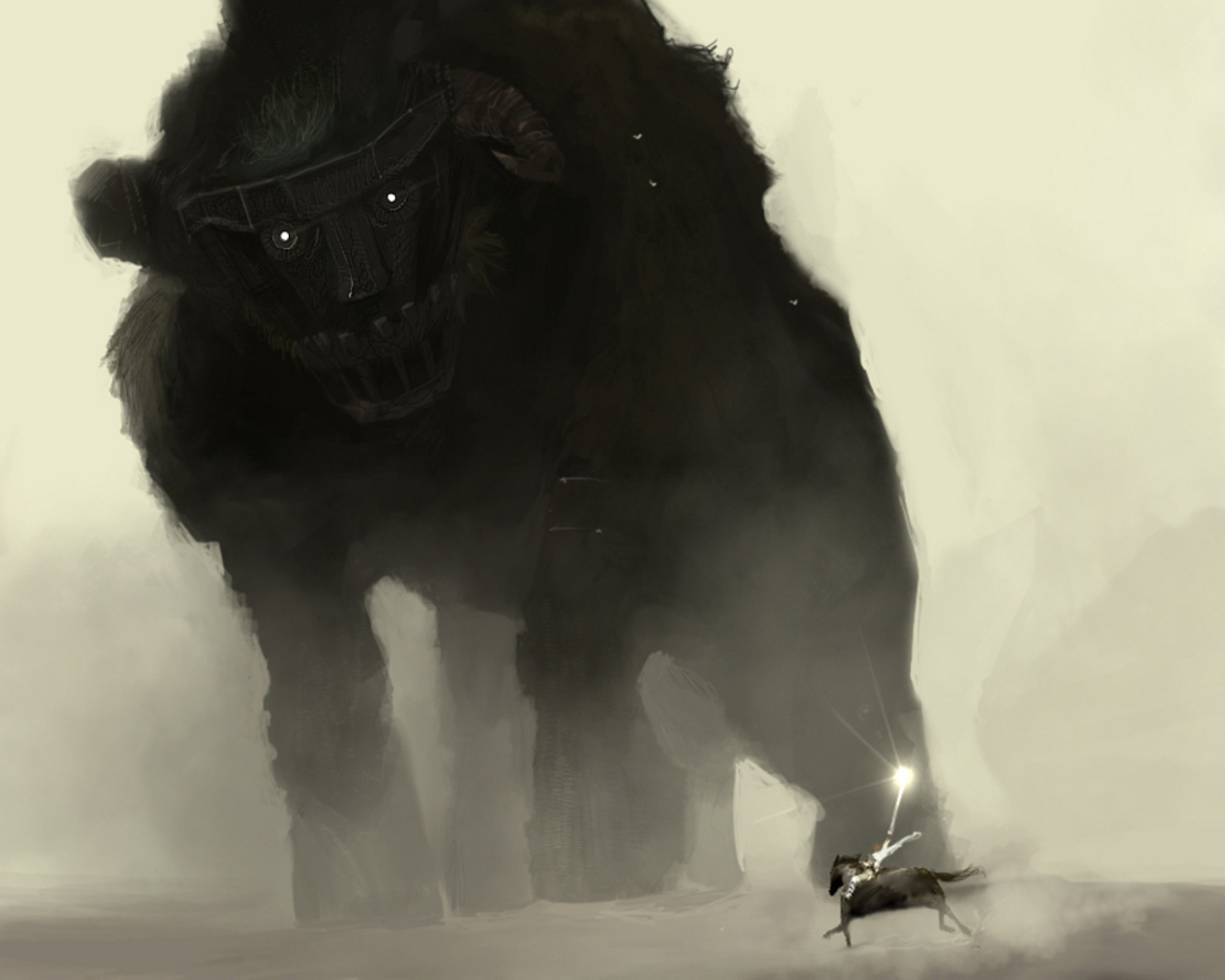
1. Writing soundtrack: Hotline Miami OST. I’ve found that videogame soundtracks are perfect for writing. I’ve written several short stories to the atmospheric (and award-winning) soundtrack to Homeworld (even though I’ve never played the game), and I revised a lot of my first novel while listening to the Shadow of the Colossus soundtrack. I’m not sure why this worked so well, especially since that novel has nothing to do with magic, horses, or swords. Maybe it’s because I’ve actually played SOTC: if memory serves, the game is twelve boss battles in a row where you fight mountain-sized stone golems with a sword, bow and arrow, and horse. There must have been some magic combination between memories of that epic, gorgeous game, plus those lush orchestral swells in the soundtrack, with the (relatively) epic push to close the distance at the end of a six-year writing slog.
But at any rate, if you like dark, new-wave music (think the soundtracks to the movies Drive and It Follows), then I’d recommend the HM soundtrack.
2. The song “Pushing Daisies” by the Pittsburgh band Big Hurry. Yes, I know this song is from 2011 and the band is probably defunct. And I don’t care.
3. This song by Jessie Ware. It’s a contender for my favorite JW song, although my favorite JW music video is still the one for Wildest Moments. My God, what a voice.
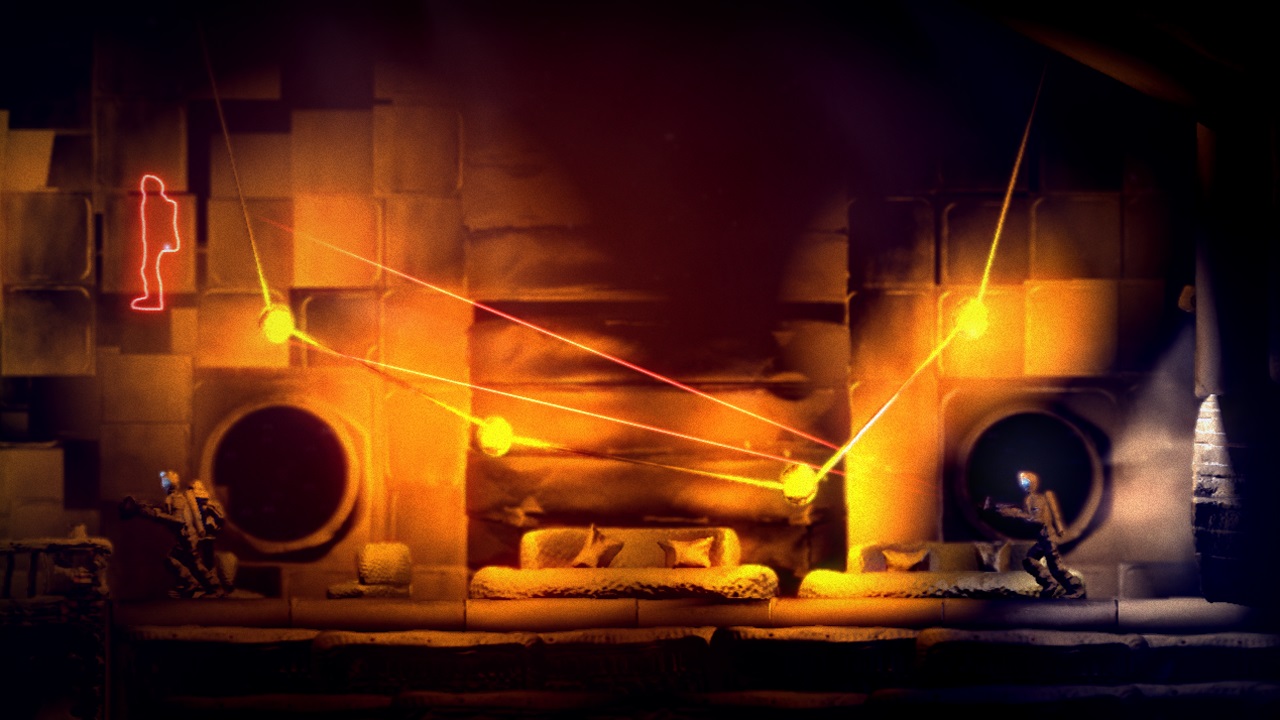
4. The Swapper. I wish I had more time for videogames. I’d probably use that time for something else, but it would be nice to have it. Anyway, I’ve carved out a few hours for this short videogame-with-an-awful-title. The game is kind of like Portal, except it’s 2D and you have to escape from a doomed space station using a gun that creates clones and swaps your soul between them. Someone once said that the beauty of mathematics lies in the idea that there is a solution for every problem. And (unlike in Portal), there’s typically only one solution per puzzle, which creates an odd sort of satisfaction in finding it. This might seem limiting somehow, but it’s probably necessary, since the puzzles become excruciatingly complex near the end. But the graphics, atmosphere, and unique gameplay make for a lovely diversion.
SOTC photo from Tarstarkas.net. Swapper photo from Facepalm games.
I won second place in North American Review’s Flash Fiction Twitter contest. The tweet that won is:

I’m a little prouder of my first submission:

And I should also mention that Eric Boyd’s entry is pretty kick-ass. Frame photo by Alexavich.

Pittsburgh’s NPR station, 90.5 WESA, will be running a segment on BELT mag and its Pittsburgh anthology! This will be part of the “Essential Pittsburgh” program our segment will air around 12:40pm. The program itself starts at noon and is repeated at 8pm. More info on the program here.
I’m honored to be featured in this anthology, which also features McArthur “Genius” Grant recipient (and Pitt colleague) Terrance Hayes, as well as many other Pitt folks, including Michael Gerhard Martin, Rachel Wilkinson, Ben Gwin, Yona Harvey, Dave Newman, Lori Jakiela, Rachel Mabe, and Scott Silsbe. So many of these people have influenced and supported me through the years, and I can’t wait to read their work in here.
I’m especially proud to announce that Jess Craig, who was a student in my Mastering Point of View course at Pitt last fall, is also being published in this anthology. I believe this is the first time I’ve been published alongside a student, so that’s really exciting.
Update: I just found out that my friend, the talented artist Rebecca Morgan, is in the anthology, too! I’m a big fan of her paintings and can’t wait to see how her aesthetic translates to the written word.
 Robert Yune