Publication

Publication

I’m very happy to announce that my story “Liberty and Union” has been accepted at The Golden Triangle.  TGT’s featuring some cutting-edge prose and poetry, and their last issue looked like this:

It’s basically the literary journal equivalent of the Palmer House in Chicago.  I’m really excited to see what they come up with for issue #2.

The Great Frustration: Three Writers on Finishing a Book-length Project

The Great Frustration: Three Writers on Finishing a Book-length Project

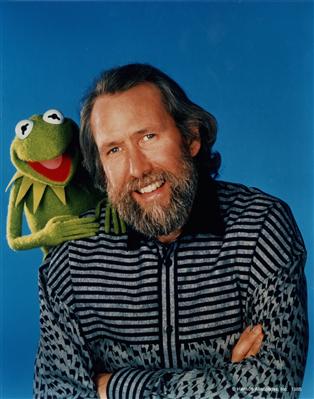
Jim Henson, class of 1960, with Kermit the Frog

It seems like just about everyone I know is finishing up a book-length project, which makes it the perfect topic for a blog post. But writing a book is a long process, so I figured I should probably keep it focused. For some reason, the title of Seth Fried’s book The Great Frustration popped into my head, and I figured frustration would be a great place to start.  

So, I asked a few writers, including Seth, to discuss the most frustrating experience they had while writing their books–and how they overcame it. Here’s what my friend and former classmate Aubrey Hirsch said:

The most frustrating part of finishing my book was facing down my own self-doubt. After years of honing my ear and voice and painstakingly training my “inner editor” to notice when something in a story isn’t working, my inner editor started to go a little bit crazy. I finally felt like I had a complete short story collection, and suddenly nothing was right. My metaphors seemed overworked, my characters felt flat and my voice was just so…me. Luckily, a number of my artist friends had experienced similar crises of faith and they encouraged me take some deep breaths, trust in the skills I’d developed as a writer over the years, and tell my inner editor to shut the fuck up. It also helped to show the manuscript to some trusted friends and colleagues. Hearing their responses helped me look at the book with a fresh point of view and gave me the courage I needed to say “It’s done”!

One of my colleagues, Heather McNaugher, has a long-awaited poetry collection coming out soon.  I’ve always been curious about the process of putting together a poetry collection.  Regarding frustration, she said:

I have published a chapbook of poems, and in April my full-length book of poetry will be published by Main Street Rag Publishing Co.  As far as completing and compiling a manuscript goes, in both cases I was my own worst enemy.  You see, I refused to ask for help.  I wrote in an attic, literally and metaphorically—in total isolation.  This is not unusual for poets, but this romanticized version of the chain-smoking loner scribbling profound thoughts means death.  Or, in my case, years of wasted postage and time.  Take this last instance, with my forthcoming book, System of Hideouts.

At last after three years of writing and rewriting, I had 50 pages of poetry I knew to be stellar.  I was especially attached to one poem, the one I read at every reading, the one I thought introduced readers to me in an alarming, authentic way.  Now, in class after class, year after year, I tell students that if they are especially attached to a particular line or stanza or poem, it invariably needs to be mercilessly revised, if not cut altogether.  How do I know this?  From painful experience.  I was a student myself once.  But in the case of this poem, did I apply my tenet?  No.  Of course not.  I made it the first poem of the manuscript, the poem that shook hands with no fewer than 25 editors of first book contests all over America (25 x 25 bucks a pop = $625.00).

I also insisted on titling the manuscript after a poem, a different poem, that people seem to like when I read at readings.  A less interesting title by far, but I was, again, peculiarly convinced that it was the one.

A mentor of mine, Sheryl St. Germain, had offered for years to help me, and at last, literally three days before she boarded a plane for a semester-long sabbatical in France, I sheepishly placed the dejected beast under her door.

Sheryl made two recommendations:  change the manuscript title, and swap the first poem for something less, uh, ferocious.  The title, she explained, did not do justice to the overall arc of the book; and the first poem yanked us into pessimism, which undercut the project’s more engaging, hopeful message.  That’s it.  Literally two changes.  Here I’d been so terrified, and so overwhelmed, by the prospect of feedback and its ensuing labor, that my solution was, RETREAT!  Within three weeks of sending out the new version, I had a call that I was a finalist in MSR’s Editor’s Select Poetry Book Series, with the option to publish. Three weeks!  It also ended up a finalist in two other contests.

Has she learned her lesson?  Only the next project will tell.

And last but not least, Seth Fried had this to say:

As a fiction writer, my interest has always been in short stories. So perhaps the most frustrating aspect of putting my first book together was the fact that publishers tend to be resistant to the idea of publishing short story collections. As my book was coming together, I spent a lot of time bemoaning the station of the short story. I was like a caricature of a disgruntled artist. I was impossibly bitter over the success of novels that I felt were mediocre when I saw so many talented short story writers (though I was thinking mostly about myself because I’m fairly self-important) struggle to get any traction whatsoever.  What snapped me out of it was that one day I started to think about Jim Henson, who has always been a hero of mine… He created some of the most beloved and iconic art of the last century, and I doubt he accomplished that by sitting around and whining about how nobody likes puppets. He saw a medium that made sense to him and waded out into it with joy and enthusiasm and what seemed like an unflappable sense of self. The artists I love and admire are people who never depend on the norms of mainstream culture to determine how they are going to embrace their will to create.  This realization has helped me to accept where short stories are at in our culture without any sense of resignation. In fact, I now feel compelled to be more urgent, joyful, and guileless in my efforts to make the kind of art that I want to make.  


Special thanks to all the writers.  I was really happy that Seth got back to me–otherwise, this blog post title wouldn’t have made much sense.  (But I would have used it anyway.)  Kind of like if John Malkovich hadn’t starred in Being John Malkovich.  If you have frustrating experiences you’d like to share (preferably pertaining to writing), feel free to do so in the comments section below.


Aubrey Hirsch is the author of Why We Never Talk About Sugar (Big Wonderful Press, 2012).  Her  stories, essays and poems have appeared in literary journals both in print and online, including American Short Fiction, Third Coast, Hobart, PANK, and others.  

Heather McNaugher is the author of System of Hideouts (Main Street Rag, 2012). She teaches poetry, nonfiction, and literature at Chatham University, and is poetry editor of The Fourth River. Her work has appeared in 5 A.M.The Bellevue Literary ReviewNew Ohio ReviewLeveler, The Cortland Review, and on the radio show, Prosody. Her chapbook Panic & Joy was published by Finishing Line Press in 2008.  She’s tried living elsewhere, but keeps coming back to Pittsburgh.

Seth Fried is the author of The Great Frustration (Soft Skull Press, 2011).  His short stories have appeared in numerous publications, including Tin House, One Story, McSweeney’s Quarterly Concern, The Kenyon Review, The Missouri Review, and Vice, and have been anthologized in The Better of McSweeney’s, Volume 2 and The Pushcart Prize XXXV: The Best of the Small Presses.

Jim Henson photo from the University of Maryland.

Geeta Kothari, Coal Maps, and Jail Poetry

Geeta Kothari, Coal Maps, and Jail Poetry

The new issue of The Fourth River’s online component is live.  Our featured selection is Geeta Kothari’s story “Wish You Were Here.”  When I was selecting fiction for our website, I noticed a musical theme developing and went with it.  It just felt right.  But aside from how she uses music in the story, I was struck by the story’s transitions, how she develops an evocative sense of ambiguity in the story’s seemingly empty spaces.

This issue’s map image is courtesy the David Rumsey Map Collection and Blog.  I picked it because it seems to mimic the activity and sweat of our featured story.  But, according to Rumsey’s website, the map, a work of art in of itself, shows the “Coal Field of the Great Kanawha Valley of West Virginia.”  It was drafted by John S. Swann in, an attorney, and published in 1867 by Colton & Co.  You can see the entire map here.   If you look hard enough, you can see Pittsburgh. 

And finally, an announcement in case you’re in Pittsburgh tomorrow: R. Dwayne Betts is giving a free public reading and book signing at Chatham  University.  From the press conference, the date is Friday, Dec. 2.  The reading will be at 8 PM at the Welker Room of James Laughlin Music Hall. Betts will read from his memoir A Question of Freedom: A Memoir of Learning, Survival, and Coming of Age in Prison (Penguin/Avery, 2009), for which he won the 2010 NAACP Image Award for Outstanding Literary Debut. In addition, he will read from his collection of poems Shahid Reads His Own Palm (Alice James Books, 2010), which won the publisher’s Beatrice Hawley Award.  Betts’ work has appeared in Ploughshares, Crab Orchard Review, and the Washington Post.  More information can be found here.

Opportunities at Weave Magazine

Opportunities at Weave Magazine


Weave Magazine, founded by the talented poet Laura Davis, is looking for Interns and Editorial Assistants in the San Francisco Bay area.  They’re also looking for a SF-Bay Events Organizer.  Details can be found here.

I’m happy to say that Weave was founded to help promote diversity in the literary arts.  It was founded by a Chatham alum, which makes it dear to my heart, and it was funded by The Sprout Fund, which “supports innovative ideas that are catalyzing change in Pittsburgh–making our community a better place to live, work, play, and raise a family.”

“No shirt or sweater ever changed a life.”

“No shirt or sweater ever changed a life.”

As the holiday season approaches, I’d like to share this timeless advice from Annie Dillard’s “Notes For Young Writers”: 

Buy hardback fiction and poetry. Request hardback fiction and poetry as gifts from everyone you know. Give hardback fiction and poetry as gifts to everyone. No shirt or sweater ever changed a life. Never complain about publishing if you don’t buy hardcover fiction and poetry regularly.

Buy books from independent booksellers, not chain stores. For complicated reasons, chain stores are helping stamp out literary publishing.

I’d also suggest magazine subscriptions–and literary journal subscriptions–as gifts.  It’s lovely to open one’s mailbox and find a magazine or journal, a nice surprise when one picks up the mail at the end of the workday.

The Fourth River’s Online Component is Live!

The Fourth River’s Online Component is Live!

I’m proud to announce that The Fourth River, Chatham’s literary journal, now has an online component!  Our inaugural piece is a story by Tina May Hall that is part of an ongoing project, a growing cluster of stories linked by GPS coordinates.  I was in love with the project the minute I heard about it, and it fits so perfectly with our theme of place-based writing. 

I’m excited about the other stories (and poems, and essays) we have lined up.  But for now, you can also read an interview with Brad Kessler, who visited and read at Chatham earlier this year.

Between the two, contributors to the first online issue of The Fourth River have won the Drue Heinz Literature Prize, the Dayton Literary Peace Prize, and have publications in The New Yorker, The Kenyon Review, and Black Warrior Review.

My Thoughts on the Pennstate Scandal

My Thoughts on the Pennstate Scandal

I feel like others have nearly every angle of this story covered, and I’m not interested in moralizing or piling on.  Many of my friends and family are PSU alumni.  In 2000, I applied and was accepted as a transfer student at the University Park campus.  (I eventually went to Pitt.)

But I’d just like to point out two quick things:

1. If Paterno is genuinely remorseful, he should offer the victims more than prayer.  Paterno’s salary was $1,022,794 in 2009.  Over the years, Paterno and his family have donated about $4 million to the university.  From a quick online search, three organizations he could donate to are the Pennsylvania Coalition Against Rape, the Child Sexual Exploitation Task Force, and the National Association to Prevent Sexual Abuse of Children. 

Pennstate President Graham Spanier, who was also fired in the wake of the scandal, had a salary of $813,855 in 2009.

2.  I understand why sports coaches come to represent the university.  Coaches embody a type of success that’s easy to measure.  They’re unofficial mascots, as opposed to administrators, whose jobs include promoting the university.  Also, many coaches stay for so long that they become campus institutions.  But this comes at a price: with a lot of schools, if you don’t count the football or basketball coach, who’s next in line to be the public face of the university?

When I was a college student, if someone asked me to quickly name a campus representative, I’d say Walt Harris or Ben Howland.  And not because I forgot about our Chancellor or other alumni.  But Harris and Howland were, well, so much more visible.  I’m sure most students nowadays, if asked the same question, would say Graham or Dixon or maybe the Pitt Panther.

But I’d like to nominate two other faces:

Wangari Maathai

This is the late Wangari Maathai, who earned a MS degree in biology from Pitt and won the Nobel Peace Prize in 2004.  According to Chancellor Nordenberg, “Her simple declaration—plant a tree—ignited the Green Belt Movement, which spread across Kenya and the rest of Africa, helping to reinvigorate indigenous forests and empower women by paying them to plant trees. Dr. Maathai’s tireless advocacy as a stewardess of the earth and the voice of women, the poor, and the oppressed changed lives, a country, and a continent.”

Sergeant Jeremy W. Feldbusch

And this is Jeremy W. Feldbusch, who earned a bachelor’s degree in Biology from Pitt in 2001.  According to the Pitt Chronicle, “An advocate for wounded servicemen and servicewomen, Feldbusch appeared in the renowned documentary Home Front, which chronicles his recovery and captures the many struggles of wounded veterans. He is the first national spokesperson for the Wounded Warrior Project and has extended his advocacy to the political arena, lobbying Congress to ease the financial and emotional stress of wounded veterans and their families. His efforts, along with those of other Wounded Warrior Project members, led to the passage of a federal law delivering millions of dollars in aid to severely wounded soldiers.”

Maathai photo from the University of Pittsburgh news, Feldbusch photo from whitehouse.gov.

Big Wonderful, Indeed

Big Wonderful, Indeed

Congratulations to Aubrey Hirsch, whose story collection Why We Never Talk About Sugar, is forthcoming from Big Wonderful Press.  My favorite story by Aubrey (that you can find online, at least) is “Amelia,” up at SmokeLong.

Also to Rachel Nagelberg, whose story “A 21st Century Love Letter” appears alongside Sherman Alexie’s work at Specs journal.

And finally, Ben Gwin has an interview up at Dark Sky Magazine, one of my favorite journals.  Clean Time sounds like a great book, and I hope someone picks it up soon!